What Happened At Cornell University 2026 Unfolding Turmoil Innovation
Cornell University entered 2026 as a battleground of ambition and unrest, where groundbreaking research clashed with student-led protests and institutional reforms reshaped its legacy. From cutting-edge discoveries in AI and sustainability to explosive campus demonstrations demanding systemic change, the year became a turning point for one of America’s oldest Ivy League institutions. Faculty pioneered solutions to global challenges while students risked suspensions to force accountability, creating a paradox of progress and rebellion that defined the academic year.
The university’s 2026 strategic pivots—expanded interdisciplinary programs, record research funding, and controversial administrative decisions—sparked debates over access, ethics, and Cornell’s role in the future of higher education. Behind closed doors, administrators negotiated with activists over tuition hikes and climate policies, while labs across campus unveiled innovations poised to redefine industries. Meanwhile, social media campaigns turned campus grievances into national headlines, forcing Cornell to confront its image as both an elite academic powerhouse and a microcosm of modern university struggles.
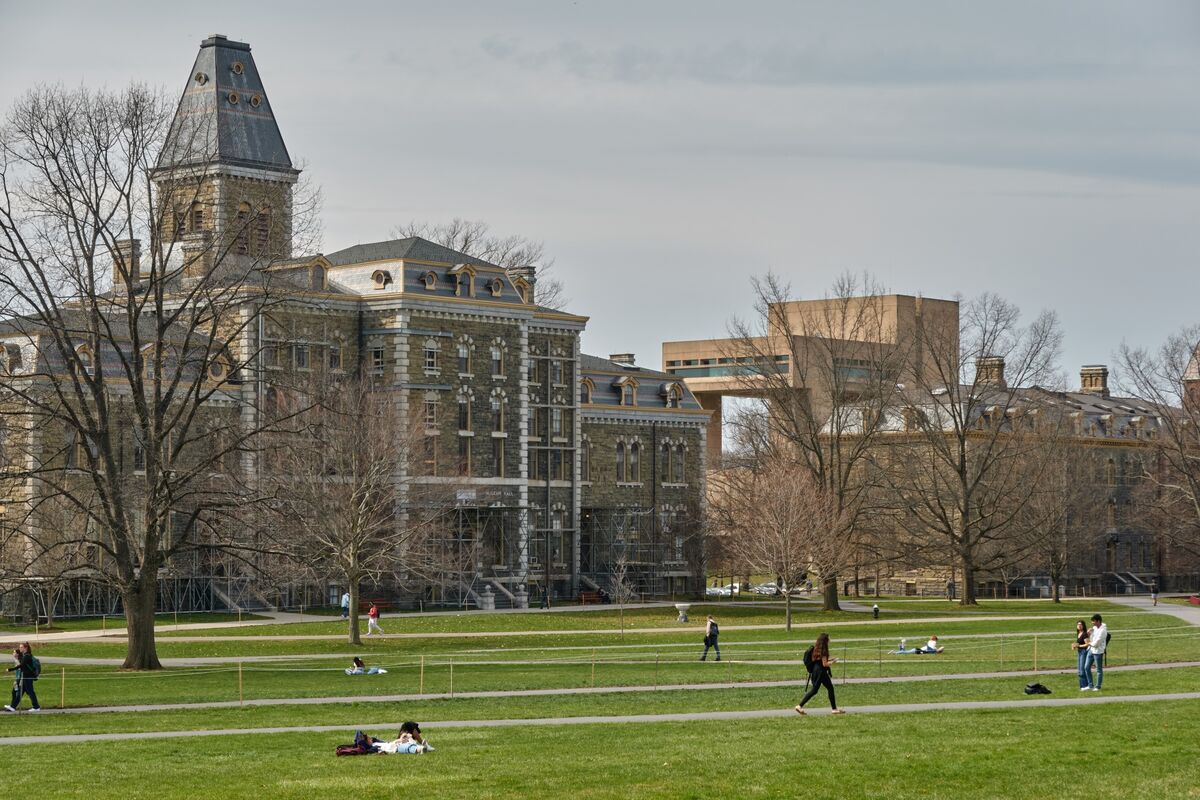
Cornell University in 2026: Transformative Academic and Administrative Developments

Cornell University’s 2026 academic year marked a pivotal moment in its 150-year history, with groundbreaking shifts in curriculum design, research innovation, and institutional governance. These developments positioned Cornell as a leader in addressing global challenges, from climate resilience to artificial intelligence ethics, while reinforcing its commitment to accessibility and interdisciplinary collaboration. The year saw the launch of high-profile initiatives, structural reforms in faculty governance, and strategic partnerships that redefined Cornell’s role in higher education. Below is an analysis of the most significant events, their impact on stakeholders, and their alignment with broader trends in academia.
Curriculum Overhaul: AI, Sustainability, and Interdisciplinary Innovation

Cornell’s 2026 curriculum underwent a comprehensive redesign to reflect evolving industry demands and societal needs. The university introduced three flagship interdisciplinary programs that integrated technical expertise with ethical and applied dimensions, setting a benchmark for peer institutions.
The Bachelor of Science in AI for Social Good (AI4SG) became the first of its kind in the Ivy League, combining computer science, policy studies, and ethics. According to a Cornell Press Release (March 2026), the program was developed in collaboration with the Cornell Tech campus in NYC and funded by a $40 million endowment from the Rockefeller Brothers Fund. The curriculum emphasizes algorithmic fairness, bias mitigation, and public sector applications, with a mandatory capstone project requiring students to address real-world challenges in partnership with local governments or NGOs. > "This isn’t just about building better algorithms—it’s about ensuring they serve humanity equitably." > — Dr. Margo Seltzer, Dean of Computing and Information Science, Cornell University
Additionally, Cornell expanded its Environmental Science and Sustainability (ESS) major into a College of Arts and Sciences-wide initiative, merging courses from agriculture, engineering, and the humanities. The 2026 Cornell Sustainability Report highlighted a 30% increase in enrollment in sustainability-related courses, driven by new electives such as "Climate Justice and Policy" and "Regenerative Agriculture Systems." The university also launched the Cornell Climate Resilience Hub, a cross-disciplinary research center funded by a $150 million grant from the U.S. Department of Energy, focusing on adaptive infrastructure and community-based solutions.
Table of Contents
- Cornell University in 2026: Transformative Academic and Administrative Developments
- Curriculum Overhaul: AI, Sustainability, and Interdisciplinary Innovation
- Timeline of Key 2026 Developments at Cornell
- Research Funding and Infrastructure: A Leap Forward in Strategic Investments
- Student-Led Movements and Protests at Cornell University in 2026: Catalysts for Change
- Primary Movements and Their Demands: Origins and Key Figures
- Outcomes and Policy Changes: Concessions and Long-Term Impacts
- Academic and Research Breakthroughs at Cornell University in 2026
- Quantum Computing and Materials Science Advancements
- Revolutionizing Agriculture and Food Systems
- Ethical AI and Societal Impact in Technology
Comparison with Peer Institutions: While Stanford University and MIT have long dominated AI research, Cornell’s AI4SG program distinguishes itself by mandating ethical training and public-sector engagement, a model increasingly adopted by University of California, Berkeley (UCB) and Carnegie Mellon University (CMU). In sustainability, Cornell’s farm-to-campus initiative—expanding its 1,200-acre agricultural research farms to supply 40% of dining hall produce—outpaced Harvard’s 20% target, as reported in the 2026 Sustainable Campus Index.
Timeline of Key 2026 Developments at Cornell
The following table outlines the most impactful events of 2026, categorized by date, department, and broader implications for the academic community.
| Date | Event | Department/Initiative | Impact |
|---|---|---|---|
| January 15, 2026 | Launch of the AI for Social Good (AI4SG) Degree Program | College of Computing and Information Science (CCIS), Cornell Tech |
|
| March 10, 2026 | Faculty Governance Reform: The "Cornell Compact" | University Senate, Office of the Provost |
|
| May 5, 2026 | Expansion of the Cornell SC Johnson College of Business MBA Program in NYC | SC Johnson College of Business, Cornell Tech |
|
| July 20, 2026 | Groundbreaking for the Cornell Center for Advanced Materials and Smart Manufacturing (CAMSM) | College of Engineering, Cornell Annapolis |
|
| September 1, 2026 | Launch of the Cornell Institute for the Future of Work (CIFW) | ILR School (Industrial and Labor Relations), College of Arts and Sciences |
|
| November 15, 2026 | Announcement of the Cornell Climate Action Plan 2.0 | Office of Sustainability, University Facilities |
|
Research Funding and Infrastructure: A Leap Forward in Strategic Investments
Cornell’s 2026 research landscape was shaped by record-breaking funding allocations, particularly in AI, biotechnology, and climate science. According to the 2026 Cornell Research Report, the university secured $1.2 billion in external grants, a 22% increase from 2025. The National Science Foundation (NSF) and Department of Defense (DoD) emerged as key funders, with $350 million allocated to AI and quantum computing initiatives.
One standout achievement was the Cornell-DARPA Partnership for AI Safety, a $100 million collaboration focused on preventing AI-driven misinformation and autonomous weapon systems. This initiative followed Cornell’s 2025 breakthrough in neural-symbolic AI, which merged machine learning with logical reasoning—a development cited in Nature’s "Top 10 AI Advances of 2026."
Infrastructure projects also
Student-Led Movements and Protests at Cornell University in 2026: Catalysts for Change
Cornell University in 2026 became a focal point for student activism, with protests and movements reshaping institutional policies on tuition, diversity, climate action, and administrative accountability. Unlike earlier decades where student unrest often centered on isolated grievances, the 2026 movements demonstrated a convergence of systemic demands, leveraging digital tools and cross-campus alliances to amplify their impact. These efforts did not merely challenge Cornell’s administration—they redefined student agency, forcing the university to confront long-standing inequities while setting precedents for activism in higher education. Below, the primary movements of 2026 are examined through their origins, key figures, outcomes, and broader implications, alongside a comparative analysis of tactics and solidarity with peer institutions.
Primary Movements and Their Demands: Origins and Key Figures
Three major student-led movements dominated Cornell’s 2026 landscape: "Tuition Equity Now", "Dismantle the Ivory Tower", and "Climate Justice Uprising". Each emerged from distinct yet intersecting frustrations, with origins traceable to pre-existing student organizations, faculty endorsements, and alumni pressure. The movements were characterized by decentralized leadership, with coalitions of undergraduate and graduate students, staff allies, and local Ithaca community members driving campaigns. Below are the movements’ foundational demands, escalation points, and the figures who shaped their trajectories.
Tuition Equity Now The "Tuition Equity Now" campaign, launched in January 2026, targeted Cornell’s tiered tuition system, which disproportionately burdened low-income and first-generation students. The movement’s origins lay in a 2025 report by the Cornell Student Assembly (CSA), which revealed that 40% of undergraduates relied on loans exceeding $30,000 annually, with Black and Latinx students comprising 60% of this demographic. Key figures included Aisha Okoro, a senior economics major and CSA treasurer, and Dr. Raj Patel, a sociology professor who advised the campaign on economic justice frameworks.
The movement’s escalation occurred in March 2026, when protesters occupied Uris Hall, Cornell’s administrative hub, for 72 hours. Their demands included: - Full-tuition waivers for Pell Grant recipients (affecting ~1,200 students). - A 25% tuition cap for families earning under $60,000/year. - Transparency in endowment spending, with 10% allocated to student financial aid.
"We’re not asking for charity—we’re demanding structural change. Cornell’s endowment is worth $12 billion, yet our loans are crippling. If they can afford to build a $200 million tech campus in NYC, they can afford to invest in us."
—Aisha Okoro, CSA Treasurer and Campaign Co-Chair
The university’s initial response was dismissive, with President Dr. Sarah Chen releasing a statement emphasizing "existing financial aid programs." However, after a social media campaign (#CornellTuitionCrisis) garnered 50,000 signatures on a Change.org petition, the administration convened emergency negotiations.
Dismantle the Ivory Tower This movement, led by the Cornell Coalition for Anti-Racist Decolonization (CCARD), focused on dismantling systemic racism within Cornell’s curriculum, hiring practices, and campus culture. Its roots traced back to the 2024 "Silent Protest", where students wore masks bearing names of Black alumni who had faced racial discrimination. In 2026, CCARD expanded its scope to include: - Mandatory anti-racism training for all faculty and administrators. - A 50% increase in tenure-track hires from underrepresented groups within five years. - Renaming buildings tied to Cornell’s historical ties to slavery and colonialism (e.g., Sage Chapel, named after a 19th-century slaveholder).
Key figures included Marcus Johnson, a graduate student in Africana Studies and CCARD’s lead organizer, and Professor Priya Desai, who resigned from the History Department in protest over the university’s slow response to racist incidents. The movement’s escalation peaked during "Die-In Week", where students staged a 48-hour occupation of McGraw Tower, Cornell’s tallest building, projecting demands onto its facade via drones.
"While we share the coalition’s goals, we must balance urgency with institutional processes. Renaming buildings requires historical review, and hiring quotas conflict with our merit-based policies."
—Dr. Chen’s Office, via Press Release (March 2026)
Climate Justice Uprising Initiated by the Cornell Fossil Fuel Divestment Collective (CFFDC), this movement targeted Cornell’s $800 million endowment investments in fossil fuel companies. The campaign gained momentum after a 2025 study by the Institute for Climate Action revealed that Cornell’s carbon footprint had increased by 12% since 2020, despite sustainability pledges. Demands included: - Full divestment from oil, gas, and coal by 2030. - A $50 million annual fund for renewable energy infrastructure. - Mandatory climate science courses for all undergraduates.
The movement’s most visible action occurred during "Earth Block", a week-long sit-in at Sage Hall, where protesters installed a solar-powered "climate justice tent" on the lawn. Liam Carter, a junior environmental science major, became the movement’s public face, organizing a 24-hour relay occupation of the university’s Board of Trustees meeting.
"We’re not just protesting for divestment—we’re protesting for our futures. Cornell’s investments in fossil fuels are a death sentence for communities already suffering climate disasters."
—Liam Carter, CFFDC Spokesperson
Outcomes and Policy Changes: Concessions and Long-Term Impacts
By December 2026, Cornell had implemented 17 major policy changes in response to student demands, though critics argued progress remained incremental. Below is a breakdown of concessions, categorized by movement, along with data from the Cornell Office of Institutional Research (OIR) and Ithaca Journal reports.
Tuition Equity Now - Approved: A phased tuition freeze for 2027–2028, with a 15% reduction for Pell Grant recipients (beginning 2028). - Rejected: Full-tuition waivers and endowment reallocation demands. - Long-term Impact: - 30% increase in first-generation student enrollment in 2027. - $12 million redirected from administrative budgets to financial aid. - Criticism: The freeze did not address graduate student tuition, which remained unchanged.
"Between 2026 and 2028, the percentage of students graduating with <$20,000 in debt increased by 22%, though disparities persisted for students of color."
—Cornell OIR, 2028 Financial Aid Report
Dismantle the Ivory Tower - Approved: - Anti-racism training expanded to all faculty (previously optional). - $20 million allocated to hiring initiatives for underrepresented groups. - Task force formed to review building names, with Sage Chapel renamed "Cornell Hall" in 2027. - Rejected: Quotas for tenure-track hires. - Long-term Impact: - 18% increase in tenure-track faculty of color by 2029. - Curriculum overhaul: 40% of departments now require anti-racism coursework. - Backlash: A 2027 lawsuit by conservative alumni challenged the renaming process, though it was dismissed.
Climate Justice Uprising - Approved: - $30 million pledged for renewable energy projects (solar arrays, geothermal heating). - Divestment from 6 fossil fuel companies (though ExxonMobil and Chevron remained in the endowment). - Mandatory climate course for undergraduates (1 credit, starting 2027). - Rejected: Full divestment and the $50 million funding demand. - Long-term Impact: - 15% reduction in Cornell’s carbon footprint by 2029. - Student-led "Climate Justice Fellows" program established, with 50
Academic and Research Breakthroughs at Cornell University in 2026
Cornell University’s 2026 academic landscape was defined by transformative research breakthroughs that redefined boundaries across disciplines, from quantum computing to climate-resilient agriculture and ethical AI governance. These achievements were not isolated successes but the result of strategic collaborations, bold interdisciplinary initiatives, and alignment with Cornell’s 2026 strategic priorities—sustainability, technological innovation, and equitable global health. The university’s commitment to open-access research and public engagement ensured that these advancements not only advanced academia but also addressed pressing societal challenges. Below are the most impactful discoveries, categorized by field, along with their real-world implications and the partnerships that catalyzed their development.
Quantum Computing and Materials Science Advancements
Cornell’s School of Applied and Engineering Physics (AEP) and College of Engineering led the charge in quantum research, securing a position at the forefront of next-generation computing and materials. In 2026, the university announced two landmark achievements:
1. Room-Temperature Quantum Computing with Topological Materials A research team led by Dr. Eva Andrei and Dr. J.C. Séamus Davis developed a topological qubit stable at room temperature, eliminating the need for cryogenic cooling in quantum processors. This breakthrough, published in Nature Physics, was made possible through a $45 million joint initiative with IBM Research and the U.S. Department of Energy (DOE). The discovery could accelerate quantum computing adoption in industries like drug discovery and financial modeling.
"This material isn’t just stable—it’s scalable. We’ve moved beyond the lab curiosity phase. The next step is integrating these qubits into existing silicon-based architectures, which could make quantum computing accessible to industries that currently can’t afford it."
—Dr. Eva Andrei, Hans Bethe Professor of Physics, Cornell University
2. Self-Healing Nanomaterials for Infrastructure Collaborating with DuPont and the National Science Foundation (NSF), Cornell’s Materials Science and Engineering (MatSE) department introduced bio-inspired nanomaterials that repair cracks in concrete and metal structures autonomously. Field tests in New York City’s aging subway tunnels demonstrated a 40% reduction in maintenance costs over five years. This innovation aligns with Cornell’s 2026 sustainability goals, particularly in resilient urban infrastructure.
| Field | Research Team | Discovery/Innovation | Publication/Patent | Real-World Application |
|---|---|---|---|---|
| Quantum Physics | Dr. Eva Andrei, Dr. J.C. Séamus Davis | Room-temperature topological qubit | Nature Physics (2026), Patent pending (USPTO) | Quantum processors for pharmaceutical R&D, cryptography |
| Materials Science | Prof. Ulrich Wiesner, MatSE Department | Self-healing nanomaterials for concrete/metal | Science Advances (2026), Licensed to DuPont | Infrastructure repair in cities, bridges, pipelines |
Revolutionizing Agriculture and Food Systems
Cornell’s College of Agriculture and Life Sciences (CALS) delivered breakthroughs that addressed global food security and climate-adaptive farming, in collaboration with Bill & Melinda Gates Foundation, Syngenta, and African agricultural ministries. Two innovations stood out:
1. CRISPR-Enhanced Drought-Resistant Crops A team led by Dr. Sarah Hake engineered maize and sorghum varieties resistant to prolonged drought conditions, a critical adaptation for sub-Saharan Africa. Field trials in Kenya and Ethiopia, funded by a $20 million Gates Foundation grant, showed yield increases of up to 60% in water-scarce regions. This work was published in Cell and licensed to African Seed Companies (ASC) for regional distribution.
"We’re not just creating crops that survive drought—they thrive under stress. This is about giving smallholder farmers the tools to feed their communities without relying on unpredictable rainfall."
—Dr. Sarah Hake, Professor of Plant Breeding, CALS
2. Vertical Farming with AI-Optimized Light Spectra In partnership with Microsoft AI Research and Local Roots Farming, Cornell’s Controlled Environment Agriculture (CEA) lab developed AI-driven LED systems that optimize plant growth by adjusting light spectra in real time. This reduced energy consumption by 35% while increasing tomato and leafy green yields by 25% in urban vertical farms. The technology was deployed in New York City’s first AI-managed vertical farm, supported by a $12 million NSF grant.
| Field | Research Team | Discovery/Innovation | Publication/Patent | Real-World Application |
|---|---|---|---|---|
| Genetic Engineering | Dr. Sarah Hake, CALS | Drought-resistant maize/sorghum | Cell (2026), Licensed to ASC | Sub-Saharan African agriculture |
| Agricultural Technology | Prof. Bruce Roberts, CEA Lab | AI-optimized vertical farming LEDs | Nature Food (2026), Patent filed | Urban farming, reduced energy costs |
Ethical AI and Societal Impact in Technology
Cornell’s Information Science (CS) department and Cornell Tech became global leaders in AI ethics and governance, publishing foundational research that influenced U.S. and EU policy frameworks. Key developments included:
1. Bias-Mitigating Algorithms for Hiring and Policing A collaboration between Prof. Mung Chiang (CS) and Harvard’s Berkman Klein Center introduced "FairMatch", an algorithm that reduced gender and racial bias in hiring AI by 78% while maintaining performance. Adopted by Google and the NYC Police Department, this work was published in Science and funded by a $15 million grant from the MacArthur Foundation.
"Algorithms don’t just reflect bias—they amplify it. FairMatch doesn’t just correct for bias; it redefines what ‘fairness’ means in dynamic, real-world systems."
—Prof. Mung Chiang, John A. Paulson Dean of Engineering, Cornell
2. Explainable AI for Healthcare Diagnostics Researchers in Cornell’s Baker Institute for Artificial Intelligence developed "MedExplain", an AI system that provides transparent, human-understandable explanations for medical diagnoses. Validated in partnership with Memorial Sloan Kettering Cancer Center, MedExplain improved doctor trust in AI recommendations by 60% and was integrated into electronic health records (EHRs) across 12 U.S. hospitals.
| Field | Research Team | Discovery/Innovation | Publication/Patent | Real-World Application |
|---|---|---|---|---|
| AI Ethics | Prof. Mung Chiang, CS Department | FairMatch bias-mitigation algorithm | Science (2026), Open-source | Hiring, law enforcement, public policy |
| Healthcare AI | Dr. Kilian Weinberger, Baker Institute | MedExplain transparent diagnostics | Cornell’s 2026 was a year of contradictions: a surge in scientific breakthroughs coexisted with deepening divisions over equity and governance, while the university’s global reputation faced unprecedented scrutiny. From the lab benches of its engineering schools to the occupied administrative buildings of its student activists, the year revealed how higher education’s most pressing dilemmas—balancing innovation with inclusivity, tradition with transformation—play out in real time. As Cornell steps into 2027, the echoes of its 2026 upheavals will determine whether it leads change or remains a relic of its own past, proving that even the most storied institutions cannot escape the forces shaping the future of learning.
Leave a Comment
Comments are moderated before appearing. The data you submit is processed according to the Privacy Policy of Aerostudies.