What Does Turning Tricks Mean Exploring Its Dual Meanings
The phrase "turning tricks" carries a duality that spans decades of cultural evolution, blending physical prowess with metaphorical cunning. Originating from African American Vernacular English, it has morphed from a term rooted in street hustle to a global slang descriptor for everything from skateboard flips to digital deception. Its journey reflects how language adapts to societal shifts, absorbing influences from hip-hop, martial arts, and underground economies while retaining an edge that challenges moral and ethical boundaries.
Beyond its literal applications in sports and dance, where precision and creativity define mastery, "turning tricks" also encapsulates the gritty realities of survival tactics and subversive ingenuity. Whether executed on a half-pipe or in the shadows of digital forums, the phrase embodies a spectrum of human endeavor—where skill meets strategy, and rebellion often redefines success. Understanding its layers reveals not just a linguistic quirk but a mirror to broader cultural narratives of ambition, risk, and reinvention.
Historical Evolution and Cultural Roots of "Turning Tricks"

The phrase "turning tricks" emerged from a complex tapestry of linguistic, social, and cultural influences, reflecting shifts in language, identity, and expression. Rooted in African American Vernacular English (AAVE), the term initially carried connotations of dexterity, skill, and adaptability, but its meaning expanded as it permeated street culture, sports, and entertainment. By the late 20th century, it became a versatile idiom, adapting to contexts ranging from physical prowess in skateboarding or breakdancing to metaphorical deceit in hustling or deception. This evolution mirrors broader societal changes, including the rise of hip-hop culture, urban youth movements, and the globalization of slang.
The phrase’s origins trace back to early 20th-century Black American speech, where "tricks" referred to clever maneuvers or schemes, often tied to survival and resourcefulness in marginalized communities. By the 1970s and 1980s, its usage diversified, influenced by breakdancing, skateboarding, and martial arts, where physical agility became a form of artistic and rebellious expression. Simultaneously, in hip-hop lyrics, the term took on layers of double entendres, blending praise for skill with critiques of exploitation.
Origins in African American Vernacular English (AAVE) and Early Usage
The concept of "turning tricks" predates modern slang, with its earliest recorded uses appearing in African American oral traditions and blues music. In these contexts, "tricks" often symbolized cleverness, cunning, or the ability to navigate adversity. For example, in blues and jazz lyrics from the 1920s–1940s, the term appeared in phrases like "turning tricks on the devil" or "tricks of the trade," where it implied outsmarting opponents or overcoming hardship.
By the 1950s and 1960s, the phrase began appearing in Black American street slang, particularly in jazz and R&B circles, where musicians and poets used it to describe improvisational skill. A notable early reference comes from Miles Davis’ 1959 album Kind of Blue, where jazz musicians were known for their "tricks"—complex solos and harmonic innovations. Meanwhile, in Harlem and Chicago’s South Side, the term took on a more literal meaning in boxing and street fights, where "turning tricks" referred to quick, evasive maneuvers to avoid blows or counterattack.
Table of Contents
- Historical Evolution and Cultural Roots of "Turning Tricks"
- Origins in African American Vernacular English (AAVE) and Early Usage
- Transition into Hip-Hop and Urban Culture (1980s–1990s)
- Physical Skill and Athletic Contexts: Skateboarding, Breakdancing, and Martial Arts
- Metaphorical and Moral Ambiguity: Hustling, Deception, and Street Survival
- Decade-by-Decade Evolution: A Comparative Timeline
- Physical Interpretations: Tricks in Sports, Dance, and Martial Arts
- Skateboarding Tricks: Mechanics and Physics of Defying Gravity
- Breakdancing and Krumping: The Art of Frozen Motion and Explosive Energy
- Comparative Analysis of Trick Difficulty Across Disciplines
- Martial Arts and Fluid Combat: The Role of Creativity in Parkour, Capoeira, and Taekwondo
- Metaphorical and Slang Usage: "Turning Tricks" in Everyday Language
- Slang Usage: Hustling and Informal Labor
- Hip-Hop Lyrics: Narratives of Survival and Ambition
- Comparative Slang Table: "Turning Tricks" and Similar Phrases
- Online Communities: Scams, Hacking, and Creative Problem-Solving
- Cultural and Societal Perceptions of "Turning Tricks"
- Stigma and Moral Judgments in Conservative vs. Liberal Societies
- Cultural Variations in the Interpretation of "Turning Tricks"
- Comparative Analysis: Perceptions Across Domains
- Media’s Role in Shaping Perceptions of "Turning Tricks"
The Civil Rights Era further shaped the phrase’s connotations, as Black activists and artists used it to describe strategic resistance against systemic oppression. For instance, Malcolm X’s speeches and blues poets like Robert Johnson often invoked the idea of "turning tricks" as a metaphor for outmaneuvering oppression through wit and adaptability.
Transition into Hip-Hop and Urban Culture (1980s–1990s)
The 1980s marked a pivotal moment in the phrase’s evolution, as hip-hop culture absorbed and redefined "turning tricks" into a multidimensional idiom. Rap lyrics began using the term to describe both physical and metaphorical skill, often with ambiguous moral undertones. Early hip-hop pioneers like Grandmaster Flash, Run-DMC, and Public Enemy employed the phrase in ways that reflected street smarts, musical virtuosity, and survival tactics.
One of the most iconic early usages appears in Run-DMC’s 1986 song "Peter Piper":
*"I’m the one, the only one, the original I’m the one, the only one, the original I’m the one, the only one, the original I’m the one, the only one, the original I’m the one who’s got the tricks, the only one who’s got the tricks!"*
Here, "turning tricks" is purely celebratory, praising the group’s lyrical and rhythmic skill. However, as hip-hop matured, the phrase took on darker, more cynical meanings, particularly in gangsta rap of the late 1980s and 1990s.
By the early 1990s, artists like Ice-T, N.W.A, and Tupac Shakur used "turning tricks" to describe deception, hustling, or even prostitution, reflecting the harsh realities of urban life. Tupac’s 1993 song "Keep Ya Head Up" includes a line that subtly critiques the commodification of skill:
*"You know the rules, you know the deal You know the game, you know the heat You know the tricks, you know the lies..."*
In this context, "turning tricks" becomes synonymous with betrayal and exploitation, a far cry from its earlier associations with artistic mastery.
Physical Skill and Athletic Contexts: Skateboarding, Breakdancing, and Martial Arts
While hip-hop was redefining "turning tricks" linguistically, physical sports and urban dance cultures were embedding the phrase into literal, high-energy expressions of athleticism. By the late 1970s, breakdancing (or "b-boying/b-girling") emerged as a visual manifestation of "turning tricks," where dancers performed acrobatic, gravity-defying moves like the windmill, headspin, and flare. The term became shorthand for mastery of movement, as seen in documentaries like Beat Street (1984) and early hip-hop films.
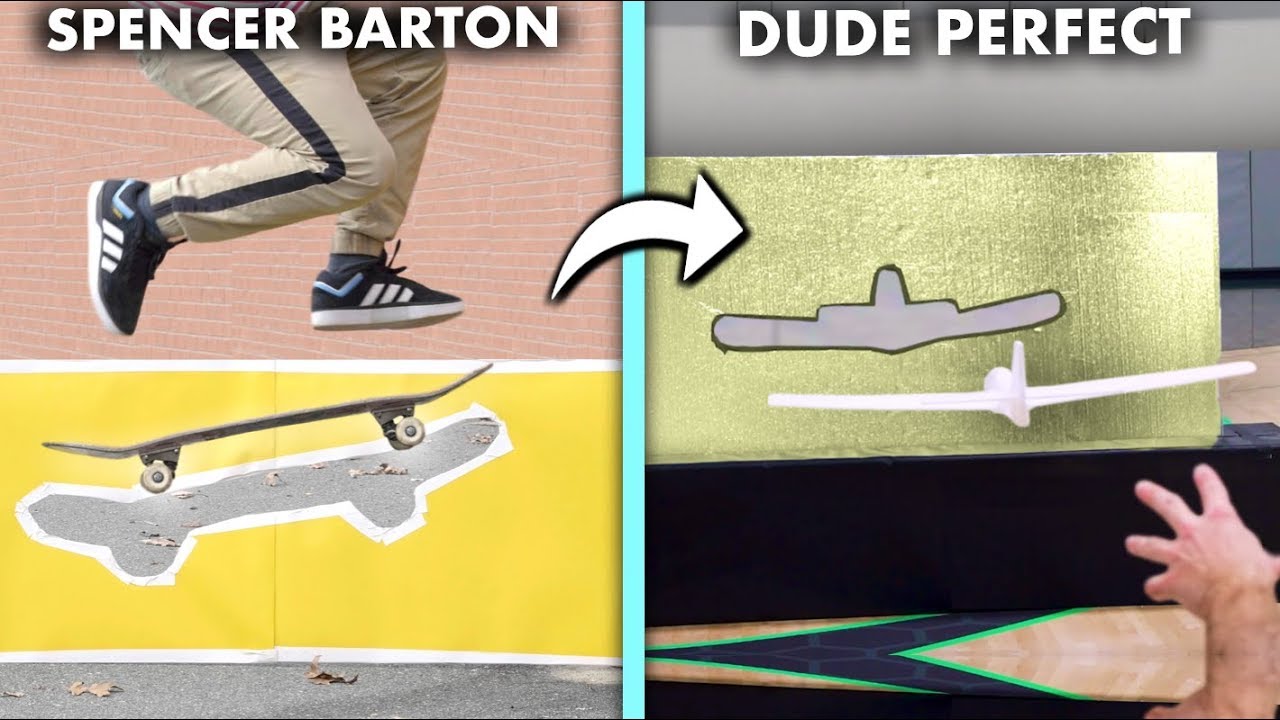
Skateboarding adopted a similar linguistic framework, where "tricks" referred to board maneuvers like ollies, kickflips, and grinds. The 1980s skateboarding scene, particularly in California and New York, popularized the phrase in underground zine culture and video footage. A 1987 Thrasher magazine article described skateboarders as:
"A breed of urban athletes who turn tricks on concrete, defying physics with every session."
Here, "turning tricks" is purely celebratory, tied to rebellion, creativity, and technical skill.
Martial arts, particularly breakdancing’s crossover with capoeira and parkour, further expanded the phrase’s physical connotations. Capoeira masters in Brazil and parkour practitioners in France used "turning tricks" to describe fluid, adaptive movement—a blend of fight, dance, and agility.
Metaphorical and Moral Ambiguity: Hustling, Deception, and Street Survival
Beyond skill and athleticism, "turning tricks" became deeply entwined with street economics, hustling, and moral ambiguity. In African American and Latino communities, the phrase often carried negative connotations, referring to deception, scams, or even sex work. By the 1990s, gangsta rap and crime dramas reinforced this duality, portraying "turning tricks" as both a survival tactic and a moral failing.
A 1995 New York Times article on Harlem street culture noted:
"In the projects, ‘turning tricks’ wasn’t just about dance moves—it was about making a living any way you could, even if it meant crossing lines."
This duality persisted in film and television, such as in John Singleton’s Boyz n the Hood (1991), where characters use the phrase to describe both skateboarding and illegal schemes.
In modern slang, the term retains this moral complexity. For example: - Positive: "He’s turning tricks on the basketball court—dribble moves no one can guard." - Negative: "She’s just turning tricks for clout, not real skill."
Decade-by-Decade Evolution: A Comparative Timeline
The following table outlines the key shifts in "turning tricks" across decades, highlighting its cultural, linguistic, and social transformations:
| Year | Context | Example Usage | Cultural Impact | |||||||||||||||||||||||||||||||||||||||||||||||||||||||||||||||||||||||||||||||||||||||||||||||||||||||||||||||||||||||||
|---|---|---|---|---|---|---|---|---|---|---|---|---|---|---|---|---|---|---|---|---|---|---|---|---|---|---|---|---|---|---|---|---|---|---|---|---|---|---|---|---|---|---|---|---|---|---|---|---|---|---|---|---|---|---|---|---|---|---|---|---|---|---|---|---|---|---|---|---|---|---|---|---|---|---|---|---|---|---|---|---|---|---|---|---|---|---|---|---|---|---|---|---|---|---|---|---|---|---|---|---|---|---|---|---|---|---|---|---|---|---|---|---|---|---|---|---|---|---|---|---|---|---|---|---|
| 1920s–1940s | Blues/Jazz Lyrics | "Turnin’ tricks on the devil’s own time" (Robert Johnson-style blues) | Metaphor for outsmarting adversity; tied to
Physical Interpretations: Tricks in Sports, Dance, and Martial ArtsThe phrase "turning tricks" transcends metaphorical usage, embedding itself deeply in the physical realms of sports, dance, and martial arts. Here, precision, athleticism, and creativity converge to redefine movement as an art form. Whether it’s the defiance of gravity in skateboarding, the rhythmic storytelling of breakdancing, or the fluid combat techniques of capoeira, these disciplines transform raw physicality into spectacle. The mechanics behind these feats reveal a fusion of physics, biomechanics, and mental resilience, where each trick demands mastery over balance, timing, and spatial awareness. Athletes and performers in these fields often describe their craft as a dialogue between body and environment, where innovation and discipline collide to create moments of pure expression.Skateboarding Tricks: Mechanics and Physics of Defying GravitySkateboarding tricks exemplify the intersection of physics and athleticism, where riders manipulate momentum, leverage, and board dynamics to execute maneuvers that seem to defy gravity. At the core of these tricks lies an understanding of center of gravity (COG), angular momentum, and friction dynamics. For instance, an ollie—the foundational trick—relies on the skater’s ability to snap their ankles downward while jumping, causing the board to lift off the ground. The physics involves Newton’s Third Law: as the tail of the board presses into the ground, the nose rises, and the skater’s upward force propels both rider and board into the air. More complex tricks, like the kickflip, add a rotational element, where the skater’s front foot flicks the board 360 degrees along its axis while airborne, requiring precise timing to land back on the board’s center. The evolution of skateboarding tricks can be categorized into tiers based on difficulty, with each level introducing new variables in height, rotation, or precision. Tier 1 tricks (e.g., ollies, pop shuvits) focus on basic aerial maneuvers and board control. Tier 2 tricks (e.g., heelflips, 50-50 grinds) incorporate spins or slides along rails and ledges, demanding advanced balance and edge control. Tier 3 tricks (e.g., tre flips, method airs) involve aerial flips and spins, often requiring ramps or quarter pipes to achieve sufficient altitude. A tre flip, for example, combines a kickflip with a heel flip, requiring the skater to simultaneously control two axes of rotation mid-air. The progression reflects not just physical skill but also an understanding of trajectory planning and adaptive problem-solving under pressure."An ollie isn’t just a jump—it’s a conversation between your feet and the board. You’re not just lifting; you’re redirecting energy. The moment your tail hits the ground, the board’s already talking back to you, and you have to listen." — Nyjah Huston, 12-time Street League Skateboarding (SLS) champion Breakdancing and Krumping: The Art of Frozen Motion and Explosive EnergyIn dance forms like breakdancing and krumping, "turning tricks" manifests as a fusion of isometric strength, rhythmic precision, and visual storytelling. A breakdance freeze, such as the windmill or handstand, requires the dancer to suspend motion mid-air or on one hand while maintaining balance. The windmill, for example, begins with a backspin into a handstand position, where the dancer’s legs rotate 360 degrees around their torso while their hands remain planted on the ground. The trick demands core stability, shoulder flexibility, and the ability to distribute weight evenly across the hands to prevent collapse. The transition from spinning to freezing involves eccentric muscle control, where dancers decelerate their momentum with precision to avoid overshooting the landing. Krumping, a high-energy offshoot of breakdancing, emphasizes exaggerated movements and controlled aggression. A signature krump move, the "Buck Wild", involves rapid, jerky motions of the arms and torso, combined with sharp knee drops and explosive hip thrusts. The trick’s power comes from plyometric energy—muscles storing and releasing kinetic energy in quick bursts. Krumpers often work in duets or battles, where judges evaluate fluidity, creativity, and emotional intensity. Unlike breakdancing’s fluidity, krumping prioritizes raw expression, where each movement is a reaction to the music’s rhythm and the opponent’s energy."In a freeze, your body becomes a statue, but your mind is still moving. You’re not just holding a position; you’re holding a story. The harder you fall, the higher you bounce back." — Rahzel, Breakdancer and Founder of the "Breakbeat Cypher" Comparative Analysis of Trick Difficulty Across DisciplinesThe complexity of tricks varies across sports and dance forms, influenced by biomechanical demands, spatial awareness, and creative execution. Below is a comparative table outlining key tricks, their difficulty levels, and the skills required to master them:
Martial Arts and Fluid Combat: The Role of Creativity in Parkour, Capoeira, and TaekwondoIn martial arts, "turning tricks" often refers to dynamic movements that blend combat effectiveness with aesthetic flair. Disciplines like parkour, capoeira, and taekwondo emphasize fluidity, adaptability, and creative problem-solving, where tricks are judged as much for their technical execution as for their artistic merit. In capoeira, for example, the gingaMetaphorical and Slang Usage: "Turning Tricks" in Everyday LanguageThe phrase "turning tricks" transcends its literal and athletic meanings, embedding itself deeply into colloquial language as a versatile metaphor for hustling, survival, and resourcefulness. In everyday speech, it often carries connotations of informal labor, financial ingenuity, or even moral ambiguity, reflecting broader societal dynamics. Whether in urban slang, hip-hop narratives, or digital subcultures, the phrase adapts to contexts where conventional work structures fail or bend to individual agency. Its usage reveals how marginalized communities, gig workers, and online hustlers repurpose language to describe their realities—sometimes as a badge of resilience, other times as a cautionary tale.Slang Usage: Hustling and Informal Labor"Turning tricks" is frequently employed in slang to describe earning money through unconventional or informal means, ranging from gig economy work to sex work. The phrase gained prominence in the 20th century as urban economies expanded, particularly in African American Vernacular English (AAVE) and Chicano slang, where it originally referred to performing sexual services for payment. Over time, its meaning broadened to include any form of transactional labor outside traditional employment frameworks. Regional variations in the U.S. highlight its adaptability:Hip-Hop Lyrics: Narratives of Survival and AmbitionHip-hop culture has been instrumental in popularizing "turning tricks" as a metaphor for both struggle and ambition. Lyrics often frame the phrase within survival narratives, where characters navigate poverty, systemic barriers, or moral compromises. Artists use it to depict the duality of hustling: the necessity of making ends meet versus the ethical dilemmas of exploiting one’s body or skills. Notable examples include:> "We got the dates and the times and the places to go / But we don’t know why we go, where we goin’ to go." >The line underscores the cyclical nature of hustling without purpose, tying economic desperation to broader social alienation. > "I’m a hustler, I’m a player, I’m a worker, I’m a fighter / I’m a survivor, I’m a winner, I’m a fighter." >Here, "turning tricks" becomes a metaphor for resilience, though the lyrics also acknowledge the risks and stigma associated with the work. > "I’m so fuckin’ sick and tired of the Photoshop / I’m so fuckin’ sick and tired of these fake-ass motherfuckin’ smiles and waves." >The phrase critiques the performative nature of ambition, where "turning tricks" symbolizes the transactional relationships people form to achieve wealth or status. In hip-hop, the phrase often serves as a storytelling device, allowing artists to explore themes of agency versus exploitation. It forces listeners to confront uncomfortable questions about morality, class, and the cost of survival—without ever providing easy answers. Comparative Slang Table: "Turning Tricks" and Similar PhrasesWhile "turning tricks" has a specific history, similar slang phrases describe hustling or transactional labor across cultures. Below is a comparative table outlining their definitions, contexts, connotations, and example sentences.
Online Communities: Scams, Hacking, and Creative Problem-SolvingIn digital spaces, "turning tricks" has been repurposed to describe non-physical forms of hustling, from scams and hacking to creative workarounds. Online forums, particularly those catering to tech-savvy or entrepreneurial communities, use the phrase to reference:Cultural and Societal Perceptions of "Turning Tricks"The phrase "turning tricks" exists in a cultural and societal gray area, where its interpretation oscillates between admiration for skill and condemnation for perceived immorality. These perceptions are deeply influenced by regional values, religious doctrines, economic contexts, and media narratives. Conservative societies often associate the phrase with deception or illicit activities, while liberal or urban cultures may embrace it as a testament to creativity and adaptability. Meanwhile, global subcultures—from street fashion in Tokyo to funk movements in Rio—redefine the term through local slang and artistic expression. Understanding these dynamics reveals how language adapts to societal norms, power structures, and even commercial exploitation, shaping public opinion in ways that can either empower or stigmatize those who "turn tricks."Stigma and Moral Judgments in Conservative vs. Liberal SocietiesThe stigma attached to "turning tricks" varies significantly between conservative and liberal societies, often tied to religious, legal, and social frameworks. In conservative societies—where traditional values emphasize morality, family structure, and rigid gender roles—the phrase frequently carries negative connotations. For instance, in regions where sex work is criminalized or morally condemned (e.g., parts of the U.S., Middle Eastern countries, or certain Asian communities), "turning tricks" is synonymous with prostitution and associated with shame, exploitation, or sin. Religious perspectives further amplify this stigma. Many Abrahamic faiths, such as Christianity, Islam, and Judaism, view sex outside marriage as immoral, framing "turning tricks" as a violation of divine law. In contrast, liberal societies—where individual autonomy and progressive values prevail—may separate the act of "turning tricks" from inherent moral judgment. For example, in Amsterdam’s legalized red-light districts or parts of Canada and Australia, sex work is decriminalized or regulated, reducing stigma and reframing it as labor. Similarly, in cities like Berlin or New York, "turning tricks" in contexts like street performance or hustling (e.g., card tricks, busking) is often seen as entrepreneurial or artistic rather than criminal. Gambling and deception also factor into this divide. In conservative circles, "turning tricks" in card games or cons may be labeled as fraudulent or sinful, while liberal or urban environments might celebrate it as a form of street smarts or social engineering. The duality highlights how cultural context dictates whether the phrase is perceived as a skill, a vice, or a necessity.Cultural Variations in the Interpretation of "Turning Tricks"The phrase "turning tricks" transcends literal meanings in different cultures, often morphing into slang that reflects local values, humor, or social dynamics. These variations underscore how language evolves to fit unique societal narratives. In Japanese street fashion, particularly within harajuku or visual kei subcultures, "turning tricks" can refer to stylish, attention-grabbing maneuvers—such as intricate dance moves, fashion transitions, or even the art of kawaii (cute) aesthetics. For example, a gyaru (gal) might "turn tricks" by effortlessly shifting between streetwear and high fashion, a skill admired for its creativity. Meanwhile, in Indian slang, "chhut" (a Hindi/Urdu term) describes quick, clever moves—whether in cricket, flirtation, or evading authority. A "chhut" in this context is a mark of intelligence and adaptability, devoid of the negative connotations found in Western interpretations. Brazilian funk culture, particularly in Rio de Janeiro’s favelas, redefines "turning tricks" through dance and performance. Funk Carioca artists often incorporate acrobatic moves ("passinhos") into their routines, where "turning tricks" symbolizes both artistic mastery and resilience. The phrase here is less about deception and more about survival and self-expression in marginalized communities. Conversely, in African American Vernacular English (AAVE), "turning tricks" in contexts like freestyle rap or breakdancing signifies improvisational skill, aligning with the cultural emphasis on creativity and verbal dexterity. These cultural adaptations demonstrate how "turning tricks" can be reclaimed as a positive trait when divorced from its Western associations with illicit or immoral behavior.Comparative Analysis: Perceptions Across DomainsThe meaning of "turning tricks" shifts dramatically depending on the domain—whether sports, entertainment, crime, or labor—each carrying distinct associations with skill, risk, profit, and social judgment. Below is a Venn diagram-style table illustrating these overlaps and divergences:
Media’s Role in Shaping Perceptions of "Turning Tricks"Media—from traditional news outlets to social media—plays a pivotal role in shaping public perceptions of "turning tricks", often through sensationalism or nuanced storytelling. Tabloid journalism and reality TV frequently exploit the phrase’s negative connotations, portraying sex workers or hustlers as victims or villains. For example, news coverage of human trafficking often uses phrases like "turning tricks" to evoke moral outrage, reinforcing stigma rather than addressing systemic issues like poverty or lack of labor rights. In contrast, documentaries and indie films offer more layered portrayals. Films like "The Act of Killing" (2012) or "Exit Through the Gift Shop" (2010) explore how "turning tricks"—whether in crime or art—reflects broader societal power structures. Similarly, social media platforms like TikTok or Instagram have rebranded "tricks" as part of viral challenges (e.g., skateboard tricks, magic tutorials), where"Turning tricks" remains a dynamic force in language, its meanings as fluid as the movements it describes—whether a skateboarder defying gravity or an entrepreneur navigating gray areas. The phrase’s endurance across generations and disciplines underscores its ability to adapt, reflecting both the creativity of those who wield it and the societal judgments that follow. As it continues to evolve, one thing is clear: its duality is not just a linguistic curiosity but a testament to how culture, skill, and survival intertwine in the modern world. | |||||||||||||||||||||||||||||||||||||||||||||||||||||||||||||||||||||||||||||||||||||||||||||||||||||||||||||||||||||||||
Leave a Comment
Comments are moderated before appearing. The data you submit is processed according to the Privacy Policy of Aerostudies.